
Concern for Renewable Energy as EU launch White Paper on Climate and Energy Package
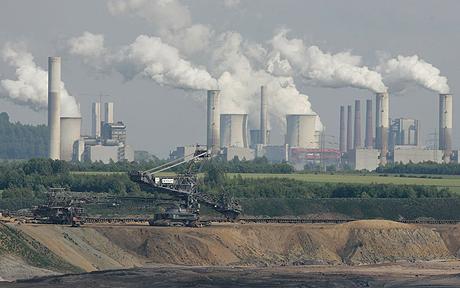
Today, European Commission President José Manuel Barroso will launch a White Paper on the EU’s 2030 Climate and Energy Package. This will contain recommendations for Europe’s climate and energy targets and policies for the next two decades, setting the direction of Europe’s economy and coming at a crucial point to build ambition for a global climate deal to be finalised in Paris in 2015.
Whilst there is much political wrangling still to come, it is likely that there will be a fundamental shift away from the legally binding ‘top down’ renewable energy targets included within the current Renewable Energy Directive to 2020. Since 2009 the EU target has been for 20% of energy to come from renewable sources with a corresponding objective to reduce Green House Gas (GHG) emissions by 40%. This has forced member states to plan and implement how they will contribute to the targets with penalties imposed if they fall short.
Under the new proposals the renewable energy targets would be scrapped and member states would not be bound to comply with any revised GHG emission ambitions.
Pressure for such changes have come from arguments that subsiding national renewable energy generation programme’s is disproportionately expensive compared to other types of low carbon generation. This cost is in turn holding back economic development and competitiveness. With other major economic players such as North America, Russia and China along with the rest of the developing world unhindered by obligations to support the expensive roll out of new low carbon technology the EU may well choose to set itself free from its own emissions shackles.
If the proposed changes happen member states will set their own renewable energy targets with more freedom as to how these contribute to GHG emission reductions.
What will this mean for the UK ? Given where we are in the political cycle Mr Cameron may well achieve his ambition to be the greenest government ever – even if this is a result of historic Labour energy policy delivering green projects and the removal of future pressure from Europe to deliver renewable targets in the future.
Energy security has long been one of our tiny islands biggest security threats and our aging fleet of nuclear power stations are coming to the end of their working lives. No investment can be found to build new nuclear plants in the UK and their construction costs will only increase. We do have some remaining infrastructure that could be revamped to solve the indigenous energy problem, as well as the one of rising consumer energy costs. Without any backlash from Europe and the relatively stable availability of resources would you bet against a swing back to the UK’s increasing reliance fossil fuels for the coming decade?
Read more in the Times article.
Related posts
The Prime Minister Theresa May has today announced the start of consultation on proposed changes to the National Planning Policy Statement with the aim of delivering more homes across
Secretary of State for Transport Chris Grayling is expected to confirm the new route for Phase 2b of HS2 later today. This announcement coincides with the award of approx
The Valuation Office Agency (VOA) has announced changes to business rates for solar PV systems and these new rates are set to come in to force in April 2017.
One of the intentions of the Planning Act 2008 was to make the permitting of major infrastructure projects more straightforward by combing planning consent and the Compulsory Purchase Order (CPO)
The current local electricity distribution network has been supplying North Shropshire with electricity reliably for many years. But with future growth plans in the region planned up to
In the energy industry a lot is being said about the development in battery storage technology. After the fall in renewable incentives a lot of focus is being given to