
Landmark High Court Ruling Changes the Rules on Statutory Powers of Entry — What Every Landowner and Farmer Needs to Know


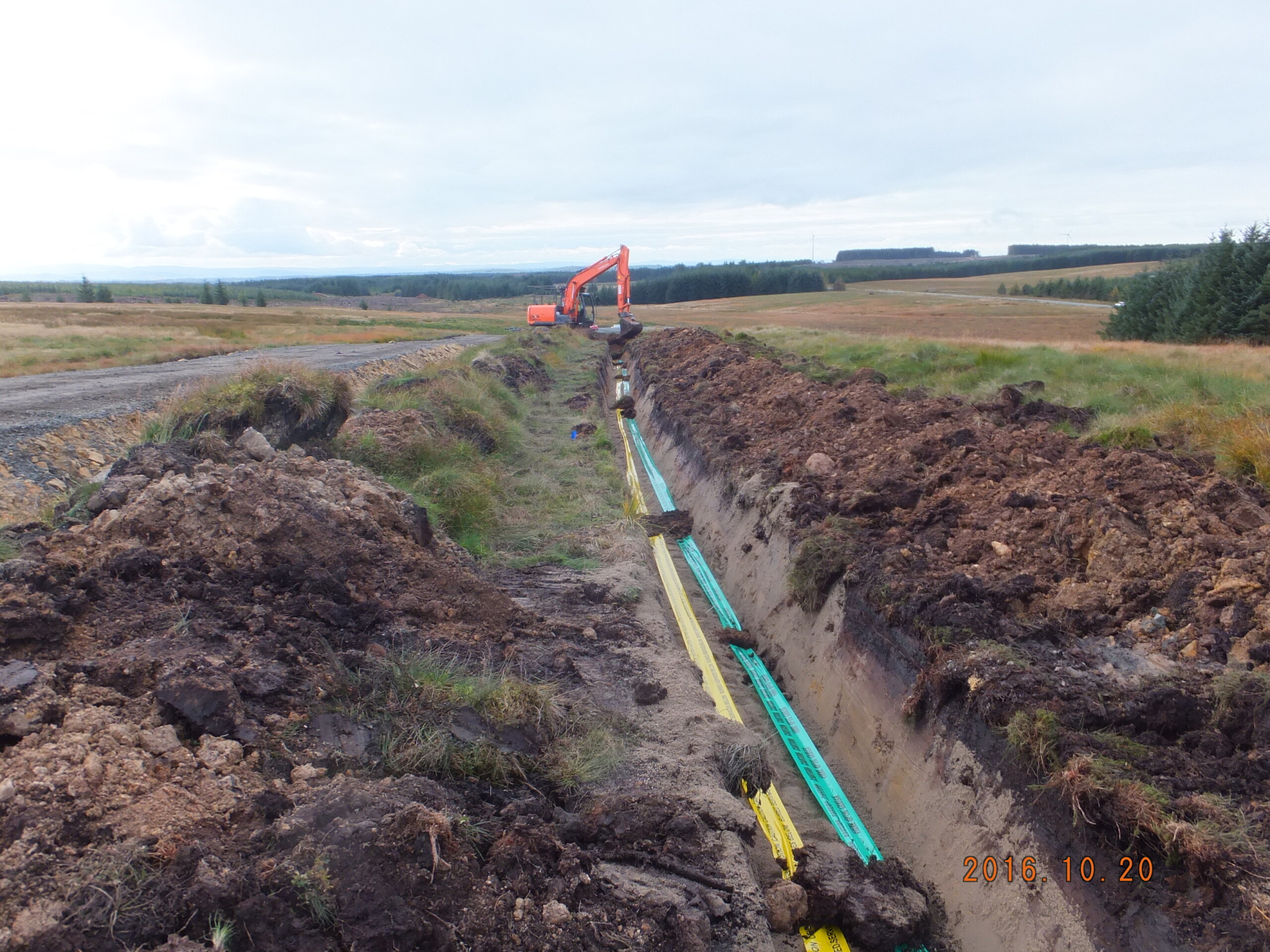
A significant High Court judgment handed down in July 2026 has clarified much needed detail on the rights of landowners and occupiers when infrastructure promoters, utility companies and acquiring authorities seek to enter their land. The decision in Barstow and others v Green Generation Energy Networks Cymru Limited [2026] EWHC 1698 (Admin) has wide-ranging implications not just for the case itself, but for every landowner and farmer in England and Wales who is, or may in the future be, affected by a major infrastructure project.
At Wilson Fearnall, we are currently acting for a number of landowners across the North West and beyond in connection with major infrastructure projects, and this judgment directly reinforces the approach we have been taking on our clients’ behalf. This article explains what the court decided, why it matters, and what it is likely to mean going forward.
What Was the Barstow Case About?
The case arose from a challenge by a Powys landowner, the Campaign for the Protection of Rural Wales, and a grassroots coalition of affected parties against Green Generation Energy Networks Cymru Limited — an independent distribution network operator surveying route options for three 132kV electricity connections in Wales. The developer had been relying on Part 7 of the Housing and Planning Act 2016, and specifically sections 172 and 174, to enter land and carry out surveys.
The landowners challenged the way in which the developer had exercised those statutory powers. Mr Justice Kimblin upheld the challenge in a number of important respects, granting six declarations that underline the practical way in which statutory powers of entry must be exercised.
What Did the Court Decide?
The judgment establishes several principles of significant practical importance to landowners:
- Individual notice is required. Every owner and every occupier must receive notice individually. The court rejected the developer’s argument that serving notice on one of two or more interested parties was sufficient. A generic notice addressed to “the occupier” through an intermediary does not satisfy the requirement.
- Notices have a limited shelf life. A notice served a year before the disputed survey could not be relied upon. The currency of any notice depends on the nature of the activity and the circumstances of the land. Promoters cannot serve a single notice and treat it as a blank cheque for entry over an extended period.
- “Reasonable time” means more than the time of day. “Reasonable time” extends well beyond simply arriving during daylight hours. Promoters must have regard to the timing, frequency, duration and impact of entry, judged against the actual use of the land — including agricultural operations, livestock welfare, disease control regimes such as bovine TB management, and the personal circumstances of those affected.
- Practical detail is mandatory. Notices must specify what will happen, where and when, with as much precision as reasonably practicable, and must genuinely invite landowners to raise site-specific concerns. Generic, pro-forma notices do not meet this standard.
- The Code of Practice carries real legal weight. Compliance with the statutory Code of Practice on Powers of Entry is not a box-ticking exercise but a genuine legal obligation that informs whether a notice is lawful.
Why Does This Matter Beyond the Barstow Case?
The Barstow decision arose under Part 7 of the Housing and Planning Act 2016, but its implications extend far beyond grid connection projects in Wales. The principles it establishes about notice, currency, reasonable time and the need for practical detail are relevant wherever statutory powers of entry are exercised across a wide range of legislation affecting farmers and rural landowners.
Electricity Act 1989
Electricity network operators — including National Grid and regional distribution companies — have extensive powers to enter land to inspect, survey and maintain electricity infrastructure under Schedule 3 to the Electricity Act. The Barstow principles about individual notice, currency and practical detail apply equally here.
Water Industry Act 1991
Water and sewerage undertakers hold powers of entry under sections 168 to 172 of the Water Industry Act 1991. With the current pace of water infrastructure investment, powers of entry by water companies are increasingly common. The Barstow principles on notice and reasonable time have direct application.
Gas Act 1986
Gas transporters and suppliers hold powers of entry under Schedule 4B to the Gas Act 1986. The requirement for proper individual notice and the limitation on how long a notice can be relied upon are directly relevant wherever gas network operators seek access for survey or inspection purposes.
Planning Act 2008 and Transport and Works Act 1992
For nationally significant infrastructure projects promoted via a Development Consent Order, promoters may use powers under section 172 of the Housing and Planning Act 2016 or section 53 of the Planning Act 2008. The Barstow judgment is directly in connection with the former, and the principles it articulates are persuasive authority for the exercise of section 53 powers too.
Pipelines Act 1962
Operators of cross-country pipelines — oil, gas, carbon capture and storage — have powers of entry under the Pipelines Act 1962 for survey and assessment purposes. With the current pipeline of carbon capture and hydrogen infrastructure projects in the UK, Barstow reinforces that generic, standard-form approaches to notice and engagement may not be sufficient
What Should You Do If You Receive a Notice or Licence?
- Do not ignore it and do not simply sign it. Both courses of action carry risk.
- Check whether the notice is actually valid. In light of Barstow, a notice may be invalid if it was not served on every owner and occupier individually, if it is more than a few months old, or if it does not contain sufficient practical detail.
- Understand your compensation rights. Where statutory powers are exercised, compensation is assessed on the full compensation code basis — covering all losses flowing naturally from the entry, proper professional costs without arbitrary caps, and recourse to the Upper Tribunal (Lands Chamber) in any dispute.
- Appoint an experienced land agent promptly. The earlier you appoint a properly qualified agent, the better your position.
Why an Experienced Agent Has Never Been More Important
The Barstow judgment, combined with the current wave of infrastructure investment across the UK, means that the number of landowners facing statutory powers of entry is growing rapidly. An agent with the right experience brings knowledge of rural business and valuation matters, whether a notice is properly constituted, understanding of the compensation code, experience of the Upper Tribunal and the ability to engage constructively with a promoter’s land access team in a way that protects the client’s position.
The days when a rural landowner could rely on goodwill and a handshake with a land access officer are long gone. Landowners must seek experienced, specialist representation.
Related posts
The Peak Cluster carbon capture and storage (CCS) project is a major new infrastructure scheme planned for the Midlands and Peak District. Its goal is to collect carbon dioxide
Resolving Compulsory Purchase Claims Early: Why early conversations, mediation and independent advice lead to better results Major infrastructure projects rely on good working relationships, but when land is needed
Everyone is aware of the proposed Inheritance Tax changes for APR and BPR as set out in the October budget. As we have previously highlighted, the statistics and analysis
This January the Rural Payments Agency (RPA) has re-launched a version of Higher-Tier Environmental Agreements for Farmers and Land Managers. Initially by invitation only, the RPA’s new scheme is
Changes to the ‘standard method’ that the government use to estimate housing needs has led to significant increase in the number of homes that will need to be delivered
Across as wide range of infrastructure projects we are seeing an increasing number of compensation claims reaching the point of dispute and, with projects utilising compulsory acquisition powers set